AcceleDent: An Overview
Tags: acceledent, children's orthodontists, dentistry, tooth movement
ST. PAUL AND MENDOTA HEIGHTS, MINNESOTA — We recently wrote here on our blog about having introduced AcceleDent into our practice. Today, we’re going into greater depth on this orthodontic appliance that has been shown to speed treatment.
AcceleDent is a hands-free device used while a patient has braces that encourages tooth movement.
How, you ask? You use the device 20 minutes per day. During that time, it creates gentle vibrations that stimulate bone biology and help your teeth move into position up to 50 percent quicker.
“It’s quite an exciting piece of technology that I learned about at the American Association of Orthodontists annual conference in Honolulu,” says Mendota Heights or St. Paul orthodontist Dr. Jennifer Eisenhuth.
Dr. Eisenhuth invisalign teen provider began using the technology in our office last spring after reading research about AcceleDent’s effectiveness. Developed by OrthoAccel Technologies, Inc., Dr. Sharon Orton-Gibbs of Walpole Specialists in Surbiton, United Kingdom was among the first orthodontists to evaluate the technology by including it in her patient treatment plans, according to a press release on AcceleDent’s website. She used the device on 65 patients. At the time the press release was published, nine had completed their treatment and eight of those completed treatment 46 percent quicker. The ninth patient had already begun treatment before AcceleDent use was prescribed, and that patient finished treatment about 16 percent faster.
OrthoAccel, which was founded in 2007, also conducted a clinical trial in the United States, which found that tooth movement in patients increased between 38 percent and 50 percent.
The makers of AcceleDent introduced the device in the U.K., Australia, France, Italy and about a dozen other countries in 2010 and 2011. The U.S. Food and Drug Administration granted approval to sell the device here in November 2011. Today, AcceleDent is available in 15 countries throughout the world.
AcceleDent is based on the research of scientists including Dr. Jeremy Mao, professor of orthodontics and Zegarelli Endowed Chair at Columbia University College of Dental Medicine in New York. Dr. Mao has published information on accelerated bone remodeling in the growth of craniofacial structures in a variety of animal models, according to the company’s website. His worked has played a key role in establishing that there is a therapeutic effect in pulsatile forces that accelerate bone modeling and remodeling in the face.
We’ll set aside the scientific jargon for a moment to wrap up with this: regardless of whether they are from Shakopee, Minneapolis, St. Paul or Mendota Heights, pediatric orthodontics and adult orthodontics patients have one thing in common, says Dr. Eisenhuth, an invisible braces and Invisalign provider. Once they get braces, they all want to know how quickly they can be done with orthodontic treatment.
“To be able to tell a patient that we offer a device capable cutting their treatment time nearly in half is an amazing thing,” she says. “I continue to be amazed by the technological advancements made in the field of orthodontics.”
Dr. Eisenhuth Sponsors Local Lacrosse League
Tags: mouth guard
ST. PAUL AND EAGAN, MINNESOTA — Summer sports are right around the corner, and students who participate in the Eagan Athletic Association’s lacrosse program have an opportunity to receive a free custom mouth guard this season by visiting our Eagan orthodontics office.
There are lots of benefits to participating in team sports, from learning good sportsmanship to staying healthy and active. We want to make sure you keep your teeth protected while you’re playing lacrosse this summer so you’ll have something to smile about on and off the field.
“This is a program we do each year for a variety of sports,” says Dr. Jennifer Eisenhuth, a pediatric orthodontist in St. Paul. “Braces can be broken or bent if players get hit in the mouth and aren’t wearing a mouth guard, but players who aren’t in orthodontic treatment also need a guard that protects their teeth from chipping and breaking.”
That means even if you’re in treatment such as invisalign teen, you still need to wear a mouth guard when you’re playing contact sports.
Players can take advantage of our offer simply by calling our office to schedule a complimentary appointment. We will take a mold of your teeth and have a mouth guard fabricated to fit you.
If you already have a mouth guard, please bring it in and we will check it to ensure that it still fits properly.
“It’s common for parents to buy a custom mouth guard for their children and just assume it will always fit, but that’s not the case,” says Dr. Jennifer who offers braces for children in St. Paul. “As your child grows, last season’s mouth guard may be too small.”
If you’re in orthodontic treatment and your bite and teeth alignment has changed significantly since your mouth guard was made that might also result in it no longer fitting properly.
The boys and girls summer lacrosse seasons begin the week of June 10, so don’t wait until the last minute to get your mouth guard.
© 2013 Sinai Marketing and Dr. Jennifer Eisenhuth. Authorization to post is granted, with the stipulation that Sinai Marketing and Dr. Jennifer Eisenhuth are credited as sole source. Linking to other sites from this article is strictly prohibited, with the exception of herein imbedded links.
What is the Harm in Having a Deep Bite?
Tags: braces, Eagan pediatric orthodontics, Enver Grove orthodontist
EAGAN AND ENVER GROVE, MINNESOTA – There are many terms used to describe malocclusions (bad bites) in patients.
Today we’re addressing the condition “deep bite” by explaining what it means, describing some common complications that are associated with a deep bite, and explaining how we correct this condition.
A deep bite is a condition that causes the teeth to line up improperly. If you have a deep bite, it means your upper teeth overlap your lower teeth and your lower incisors make contact with gum tissue in the upper arch of your jaw. It is one of the most common malocclusions we see in children and adults that occur along with other associated malocclusions. It often is thought of as among the most difficult to successfully treat.
“Minor cases of deep bite can be just a matter of aesthetics,” says Enver Grove orthodontist Dr. Jennifer Eisenhuth. “But extreme cases of deep bite can cause serious issues with the dentition.”
The constant contact of the lower teeth with the gum area behind the upper teeth ultimately can cause gum recession and lead to damage to the upper teeth’s roots, says the expert who offers invisible braces treatment such as tooth-colored ceramic braces and Invisalign.
We prescribe treatment based on each patient’s specific needs, but a deep overbite can be corrected via a variety of methods.
“We always want surgical correction to be the treatment of last resort,” says Dr. Jennifer, who also treats Eagan pediatric orthodontics and adult orthodontics patients. “This is one of many reasons why we, along with the American Association of Orthodontists, recommend children receive an orthodontic evaluation by age 7.”
When a problem such as deep bite can be identified early, typically it can be treated using methods that are less invasive than surgery. However, the determined correction method must take into consideration what would be most beneficial or improve the patient’s facial appearance and oral function the most, she says.
Sometimes we use a fixed or removable acrylic bite plane to correct the deep bite by extrusion of molars. The fixed version of this appliance is anchored into the mouth using bands on the upper first permanent molars, and it has an acrylic bite plane that rests behind the upper front six teeth. How long a patient must wear the appliance always depends on the amount of correction required, but results typically are achieved within three to six months.
Some patients initially complain that this appliance affects their speech, but they quickly get used to wearing the appliance.
When wearing your bite plate, it is normal for your back teeth to not meet all the way. It may take a few weeks to completely adjust to your new bite plate.
Because deep bite can be difficult to successfully treat, optimal treatment begins with a proper diagnosis. That is achieved through a comprehensive orthodontic evaluation that includes a full set of panoramic X-rays and digital photographs. Then we can develop a unique treatment plan and an efficient appliance design for you.
Because vertical facial growth continues into a child’s late teens, a maxillary removable retainer with a bite plane is often prescribed for several years after a patient’s orthodontic treatment is completed. This helps ensure the results we achieve are maintained.
© 2013 Sinai Marketing and Dr. Jennifer Eisenhuth. Authorization to post is granted, with the stipulation that Sinai Marketing and Dr. Jennifer Eisenhuth are credited as sole source. Linking to other sites from this article is strictly prohibited, with the exception of herein imbedded links.
Dr. Jennifer Adds AcceleDent to Her Treatment Options
EAGAN AND MINNEAPOLIS, MINNESOTA— How soon will I get my braces off?
That’s a question we hear almost every time we put braces on a patient. Patients who undergo orthodontic treatment using our new AcceleDent system are being given timeframes that have them grinning from ear to ear.
We began using AcceleDent in our practice, which provides orthodontics for children and adults in spring 2012. This system is used in conjunction with braces, and it features a hands-free device the patient uses 20 minutes daily to accelerate tooth movement. It creates gentle vibrations that stimulate bone biology and help teeth move into position according to Dr. Jennifer Eisenhuth’s treatment plan up to 50 percent quicker.
“This faster tooth movement can result in a reduction in length of treatment, which can put patients on the fast track to beautiful smiles,” says Dr. Eisenhuth, who also is an Eagan Invisalign Teen provider.
AcceleDent is a handheld device that must be fully charged prior to use. Patients apply normal bite force to the mouthpiece, which is in the shape of the dental arch, for 20 minutes per day. A good estimate of ideal bite force is biting firmly enough to hold your AcceleDent in place without using your hands.
Research conducted on AcceleDent use has confirmed that it encourages faster tooth movement during treatment, according to the company’s website. OrthoAccel has sold the AcceleDent system outside the United States since October 2009. The Food and Drug Administration gave clearance for its use in the U.S. in November 2011.
“Not every patient is a candidate for this new system,” says Dr. Eisenhuth, an adult and kids orthodontist. “But for those who are candidates, we’ve been quite pleased with the results thus far. We look forward to continuing to use it in conjunction with orthodontic treatment.”
If you would like to have more information about children’s braces, Invisalign braces or you would like to schedule a complimentary consultation call (651) 406-8100. Dr. Eisenhuth’s office is located at 3340 Sherman Court in Eagan.
© 2013 Sinai Marketing and Dr. Jennifer Eisenhuth. Authorization to post is granted, with the stipulation that Sinai Marketing and Dr. Jennifer Eisenhuth are credited as sole source. Linking to other sites from this article is strictly prohibited, with the exception of herein imbedded links.
More Options Means More People Seeking Orthodontic Treatment
Tags: braces in Minneapolis, pediatric orthodontics in Minneapolis
EAGAN AND ST PAUL, MINNESOTA – Orthodontic treatment isn’t just an American phenomenon, and neither is the growing trend of adults seeking treatment.
But here’s something that we’ve not seen many studies on, yet we observe it in our adult and pediatric orthodontics practice all the time, more families are getting treatment.
“Sometimes it’s simultaneously, and sometimes it’s consecutively, but we have a lot of families who get treatment here in our office,” says Eagan orthodontist Dr. Jennifer Eisenhuth.
It makes sense, for a couple of reasons. First: A significant number of children stand to benefit from treatment because of bite or alignment issues. Second: Many children don’t receive treatment, and aesthetic options such as invisible braces make treatment more palatable when this demographic reaches adulthood.
A 2003 study on children’s dental health in the United Kingdom reported that about one third of children stood to benefit from orthodontic treatment, according to a British Orthodontic Society report. Other orthodontic studies claim as much as 70 percent of the U.S. population could benefit from treatment.
It should come as no surprise that the American Association of Orthodontists has studied those who undergo orthodontic treatment, and they have found that between 1982 and 2008, the number of U.S. children and adults who underwent treatment to correct some form of malocclusion grew by 99 percent. The number of adults who sought treatment grew by 24 percent from 1989 to 2008.
There is a 2011 AAO study that shows the number of people who got braces has surged by 103 percent since the 1980s, and adult patient numbers rose by 25 percent during that timeframe.
Here in our practice, we have a family of five children where all of them have undergone treatment, are in the process of getting treatment, or plan to get braces here.
“But in addition to that, we have parents who bring their children here for braces, and they end up getting braces or Invisalign themselves,” Dr. Eisenhuth , a Minneapolis braces provider, says. “Sometimes it’s because they learn of the true oral health benefits treatment provides. Others, it’s because they simply want to feel more confident about their smiles.”
A lot of parents take the approach that once they’ve provided treatment for their children, they feel they deserve treatment themselves. But make no mistake – technology also has played an important role. There are few adults who want beautifully aligned teeth badly enough that they’re willing to don the “brace face” look for a couple of years.
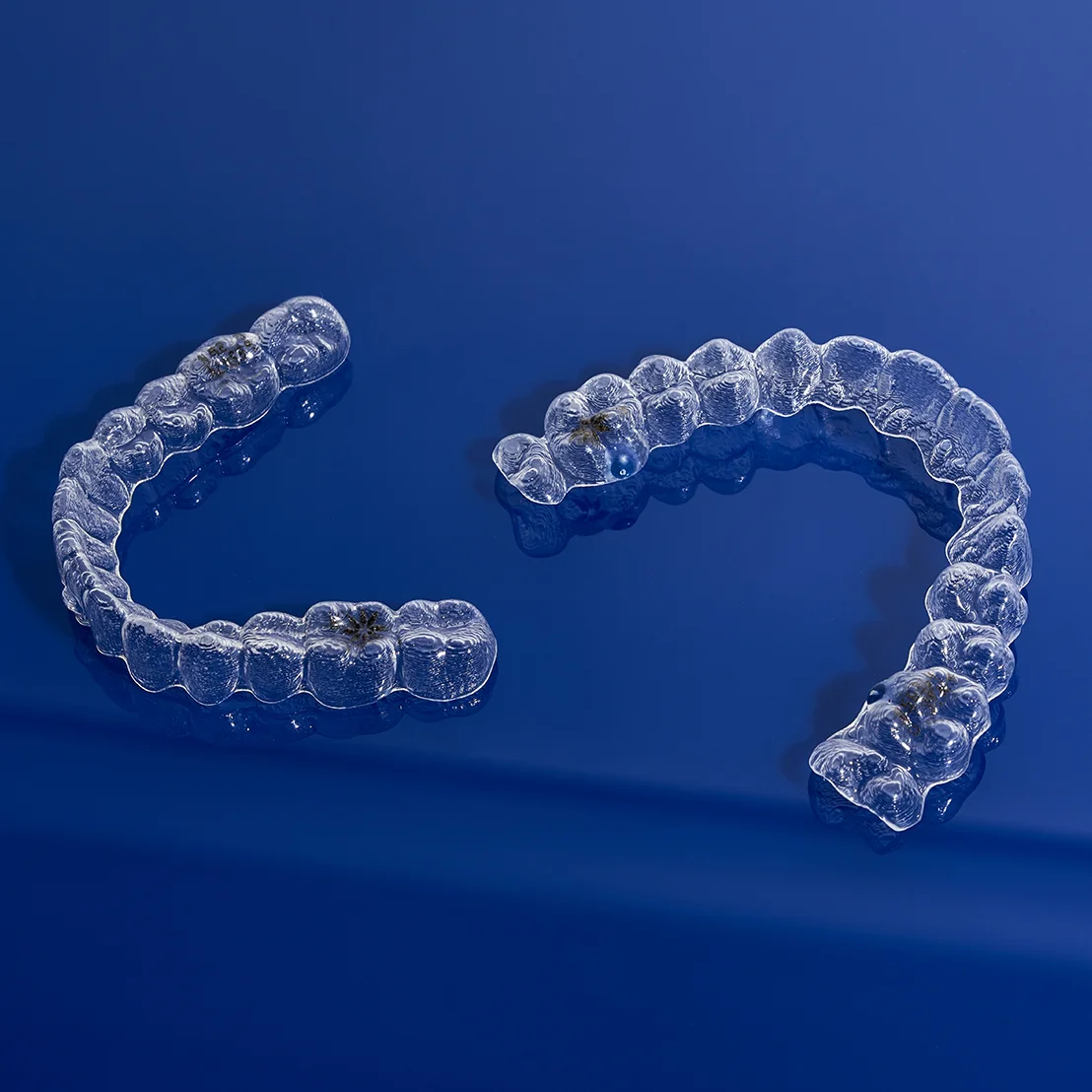
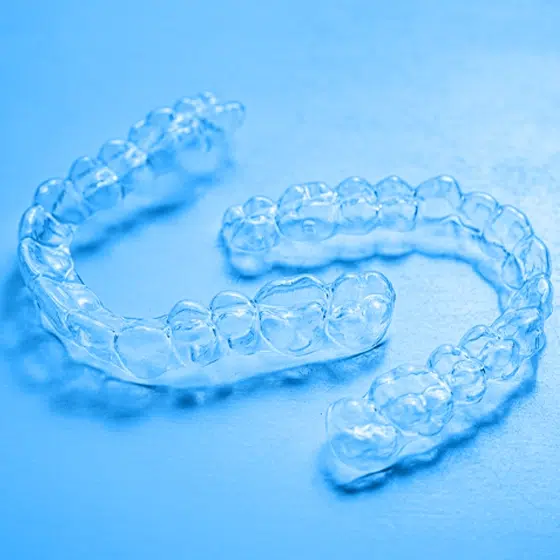
Ceramic braces that are the color of natural teeth, lingual braces that go on the backs of the teeth, and Invisalign, which looks like a clear plastic retainer, have helped make this decision an easy one for grownups.
We also like to think that our industry as a whole has helped spur the increase in parents undergoing treatment. The AAO estimates that about one quarter of orthodontic patients today are adults. People are more aware of orthodontic treatment’s oral health benefits these days. Teeth that are out of alignment can wear improperly, create crevices and corners for plaque and tartar to build, and be more susceptible to trauma. For example, a person with severe overjet is more likely have broken or damaged teeth if they get hit in the face while playing sports or suffer other types of facial trauma.
Don’t forget about the self-esteem benefits orthodontic treatment provides, either. Children and adults can be incredibly self-conscious of their overjet, overbite or underbite. We’ve seen patients visit us for the first time and refuse to smile and show their teeth because they’re so self-conscious.
“Thankfully, it doesn’t have to be like that,” Dr. Eisenhuth says. “We have a lot of options at our disposal that can get your teeth looking their best.”
© 2013 Sinai Marketing and Dr. Jennifer Eisenhuth. Authorization to post is granted, with the stipulation that Sinai Marketing and Dr. Jennifer Eisenhuth are credited as sole source. Linking to other sites from this article is strictly prohibited, with the exception of herein imbedded links.
Woodland Elementary is a Thousand Dollars Richer
Tags: Invisalign Teen, Minneapolis orthodontics, St. Paul pediatric orthodontics

EAGAN AND ST. PAUL, MINNESOTA— Dr. Jennifer Eisenhuth and her entire staff are proud to be a part of this community, and we are always on the lookout for new and creative ways to be involved.
One opportunity presented itself recently when our office donated $1,000 to the Woodland Elementary School library. The money will be used to purchase new reading materials for students.
“I was so happy that our office could provide this donation because I’m an avid reader and I hope our donation contributes to lots of children developing a love for reading,” says Eagan and St. Paul pediatric orthodontist Dr. Jennifer.
The donation comes at a good time, as per-student spending has decreased by 1 percent in Minnesota since 2008, according to information provided by the Center on Budget and Policy Priorities.
Libraries are a valuable component of student education. A study conducted by the Center for International Scholarship in School Libraries, released a year ago by the New Jersey Association of School Librarians, found that New Jersey school libraries and librarians favorably contribute to the intellectual life of a school, as well as the development of students who are able to function in complex and increasingly digital information environments, according to a NewJersey.com article.
The study involved two phases, the second of which examined a sampling of effective school libraries to identify the key criteria that enabled those libraries to flourish and contribute to their schools’ learning agendas.
The study found:
- School libraries are learning centers connected to classroom instruction
- School libraries are a launch pad for student-initiated inquiry
“Although this study wasn’t conducted in Minnesota, we know New Jersey students don’t function in a vacuum,” says Dr. Jennifer, a kids orthodontics provider who also offers Invisalign Teen to those who are candidates. “We suspect this study is a good indicator of the benefits of libraries to students throughout the nation.”
So here’s to you, Woodland Elementary bookworms! We hope our donation makes it possible for you to get lost in a great book some time soon.
© 2013 Sinai Marketing and Dr. Jennifer Eisenhuth. Authorization to post is granted, with the stipulation that Sinai Marketing and Dr. Jennifer Eisenhuth are credited as sole source. Linking to other sites from this article is strictly prohibited, with the exception of herein imbedded links.
Is Phase I Treatment All My Child Needs? Parents’ Questions Answered
Tags: braces, Eagan invisalign teen, Rosemount pediatric orthodontist

EAGAN, ROSEMOUNT AND MINNEAPOLIS, MINNESOTA – Numerous patients visit us here at our Eagan and Rosemount practice annually who are excellent candidates for Phase I orthodontic treatment.
We are flattered that our practice comes to mind when parents think of orthodontics for their children. Understandably, many parents are curious if undergoing Phase I treatment eliminates the need for braces in the future.
Any kids orthodontist will tell you that every child’s teeth and smile are unique, so the answer isn’t a clear “yes” or “no.” We’ve compiled some information we trust you will find helpful regarding circumstances that would determine whether further orthodontic treatment could be required for your child in the future.
First, a little background on Phase I treatment. Also referred to as “interceptive” orthodontics treatment, Phase I treatment typically begins when a child is between 6 and 10 years old and her growth process is still ongoing, said Dr. Jennifer Eisenhuth, an St. Paul Invisalign Teen provider. It rectifies dental developmental issues and prevents current dental or jaw development problems from worsening.
This phase of treatment may include partial braces, devices that resemble a retainer, or other orthodontic appliances.
“A cool aspect of Phase I treatment is that we can work with your child’s facial growth to accelerate the process, and get your child off an extraction path,” said Dr. Eisenhuth. “It allows us to make crucial adjustments when the jaw is still growing. Often, this can shorten future treatment times, or even negate the need for additional treatments.”
A variety of flaws with tooth alignment, crowding and spacing, gum health, jaws and facial development can be resolved through Phase I treatment. This includes crossbites, underbites, deep bites and jaw growth issues.
In some cases, failing to undergo Phase I treatment can lead to the need for future tooth extractions or orthognathic (jaw) operations.
“When possible dental issues are diagnosed and addressed at a young age, it typically streamlines the treatment process and allows for fantastic results in less time,” Dr. Eisenhuth said.
For example, the palate can be widened to adequately fit adult teeth, and jaw growth can be manipulated to correct underbite.
While Phase I treatment is capable of improving many dental faults, it can’t perfect every bite and alignment issue.
For this reason, Phase II treatment may be required. In situations where adult teeth cannot erupt properly, Phase II treatment comes to the rescue. It is in situations like this that we often place our Phase I patients on a monitoring track until the appropriate time for the adult teeth to be guided into their permanent position.
The American Association of Orthodontists suggests that every child have an orthodontic evaluation by the time they are 7 years old. Some adult teeth have erupted by the time the child reaches this age, and the bite is established. That enables us to identify whether a problem exists that should be addressed.
On many occasions, no orthodontic work is necessary at this young age, Dr. Eisenhuth said. But in those isolated cases where it is suggested, it is wise to have problems diagnosed and addressed as early as possible.
© 2013 Sinai Marketing and Dr. Jennifer Eisenhuth. Authorization to post is granted, with the stipulation that Sinai Marketing and Dr. Jennifer Eisenhuth are credited as sole source. Linking to other sites from this article is strictly prohibited, with the exception of herein imbedded links.
Research Shows a New Smile Can Help Find a Mate
Tags: life with braces, lingual braces, St. Paul orthodontist
EAGAN AND MINNEAPOLIS, MINNESOTA – People in relationships this time of year are getting excited about all the magic Valentine’s Day brings to them and their loved ones.
But not all of us are fans of the love – filled day. For some of you, Valentine’s Day is just another day to curse the world for your single status on Facebook. It may be time for you to consider revamping your image with a new smile. Your pearly whites matched with your amazing personality may be just what you need to snatch a new sweetie. Treatment options include traditional or lingual braces or even Invisalign, says Eagan and St. Paul orthodontist Dr. Jennifer Eisenhuth, of Minneapolis Orthodontics by Dr. Jennifer Eisenhuth.
The reality is people judge you based on your first impression and with so many people into the online dating world, it’s important to have your best smile out there. If you are smiling with a closed mouth, your potential mate may move on and not even see that your bio says you are an amazing juggler or stamp collector.
The same goes for people on the job hunt. Investing in your smile is a great way to help your knowledge and skills actually be seen by the interviewer and not have them focus on your less – than – perfect teeth.
According to the American Dental Association, your smile is your best physical asset. When you have a healthy smile you are more confident and it is easier to meet and talk to people because you are happier with the way you look.
Author Lynn Grabhorn says, “Whatever you’re feeling is what you’re vibrating and what you’re vibrating is what you’re attracting.”
If you’re not emphasizing happiness or confidence when communicating, it can harm your ability to connect with people and get ideas across.
Make a change in your appearance. Orthodontic treatment can correct a variety of bite and alignment ailments. It’s also worth mentioning that life with braces doesn’t have to include metal brackets and wires on your teeth. With new technology such as Invisalign and lingual braces – which go on the back of the teeth – no one even has to know you have braces.
If you’re single this Valentine’s Day, job hunting or just ready to feel more confident in yourself, consider consulting an orthodontist. You never know, cupid’s arrow may hit you sooner than you think.
© 2013 Sinai Marketing and Dr. Jennifer Eisenhuth. Authorization to post is granted, with the stipulation that Sinai Marketing and Dr. Jennifer Eisenhuth are credited as sole source. Linking to other sites from this article is strictly prohibited, with the exception of herein imbedded links.
3 Reasons for Seeing Your Dentist While in Orthodontic Treatment
Tags: adult teeth, Minneapolis invisalign teen, St. Paul pediatric orthodontics
EAGAN AND ST. PAUL, MINNESOTA— Undergoing orthodontic treatment has oral health benefits in addition to the aesthetic improvements we often think of first. But that doesn’t mean the process of improving oral health negates the need to continue seeing your dentist at least twice a year.
Patients who visit our Eagan and St. Paul pediatric orthodontics practice sometimes ask this question, so Dr. Jennifer Eisenhuth is sharing three reasons why those dental visits are imperative, regardless of what types of braces are on your teeth.
1. Plaque and tartar need to be routinely removed from the teeth.
Orthodontic appliances on the teeth create new hiding places for bits of food and bacteria to accumulate. Over time, plaque and tartar can build around orthodontic brackets, bands and other appliances in your mouth, says Dr. Eisenhuth, a kind and adults’ orthodontist.
Orthodontists routinely remind their patients of how important good oral hygiene is while in treatment.
“It keeps your teeth and gums healthy,” says Dr. Eisenhuth, also a Minneapolis Invisalign Teen provider. “Professional cleanings and checkups with a dental hygienist and dentist are necessary to remove plaque and tartar from the teeth and from around your appliances.”
Everyone needs their teeth cleaned and checked at least twice annually, and they need X-rays once a year to make sure the teeth are in good shape and free of cavities.
Understand this: regardless of what kind of orthodontic treatment you’re undergoing, it doesn’t eliminate the need for routine dental visits.
2. Decalcification- it’s permanent.
This is a potentially serious condition in which calcium levels in your teeth are diminished. It is the result of plaque buildup on teeth enamel and it materializes as white spots on your teeth’s surfaces, Dr. Eisenhuth says. Once decalcification happens, it cannot be reversed. If left untreated, it can lead to cavities.
“This is one of the most frequent issues among orthodontic patients, and what makes it so unfortunate is that it is entirely preventable,” she says.
Limiting the quantity of sugar-filled and acidic foods, maintaining a good oral care routine, and keeping up with regular dental appointments go a long way toward preventing this condition.
3. Cavities can lengthen treatment times.
If you can’t wait to get your braces off, make sure you see your dentist regularly.
Dentists offer fluoride treatments that strengthen your teeth and serve as a shield against cavities. You don’t want to be diagnosed with a cavity during orthodontic treatment, Dr. Eisenhuth warns.
If you do and the cavity is in a location that requires the removal of some of your appliances so the cavity can be reached and filled, you’re looking at some significant time commitments to address this. You’re also looking at lost orthodontic progress.
First, you must schedule an orthodontic appointment to have the necessary appliances removed. Then you’ll have to get your cavity filled by your dentist. Finally, another trip to the orthodontist is needed to replace the removed appliances.
All of that time between appointments is time when those teeth aren’t in active orthodontic treatment. That means progress is at a standstill, or can even be lost.
“We don’t want that to happen to our patients,” Dr. Eisenhuth says. “Keep seeing your dentist so you get the results you’re working toward as quickly as possible. You’ll be glad you did.”
© 2013 Sinai Marketing and Dr. Jennifer Eisenhuth. Authorization to post is granted, with the stipulation that Sinai Marketing and Dr. Jennifer Eisenhuth are credited as sole source. Linking to other sites from this press release is strictly prohibited, with the exception of herein imbedded links.
Wisdom Teeth Often Falsely Blamed for Causing Tooth Crowding
Tags: Inver Grove Heights orthodontist, Invisalign provider, orthodontist Minneapolis
EAGAN AND MINNEAPOLIS, MINNESOTA— Have you ever thought about all the information that we readily accept
as fact, and then we find out it’s actually just a myth or an old wive’s tale?
If you pull a gray hair from your head, several more will grow back in its place. Sitting too close to a
television screen will ruin your eyesight. These are “facts” we’ve long viewed as being, well, facts.
Here’s another to add to the list: wisdom teeth must be removed to prevent them from crowding your other
teeth.
Also called third molars, professionals have pointed the finger at wisdom teeth when seeking a
responsible party for incisor crowding for more than 150 years, according to an American Association of
Oral and Maxillofacial Surgeons white paper on third molar data. Besides being a concept widely accepted
by the public at-large, many oral surgeons and orthodontists even believe this to be true.
We are exploring this myth more closely, because it’s a concern patients sometimes raise with their
orthodontist, says Dr. Jennifer Eisenhuth, an Eagan orthodontics specialist who treats patients from
throughout the greater Minneapolis area.
“At face value, the theory seems to hold water,” Dr. Eisenhuth says.
The bulk of our patient base consists of children and adolescents. Sometimes they have not lost all of
their baby teeth yet, and some patients have their full set of adult teeth except the wisdom teeth,
which haven’t yet come in. For those reasons, it might seem possible that if you’ve finished your
orthodontic treatment, your teeth are starting to shift back into their old positions, and your wisdom
teeth are beginning to erupt, they’re the culprit.
“To further frustrate things, research is out there that both refutes and supports this notion,” says
Dr. Eisenhuth, who offers treatment with traditional metal braces, clear braces, Invisalign and
Invisalign Teen. “However, much of the supporting research suggests while wisdom teeth may play some
role in crowding, the role might not be clinically significant.”
Research conducted at the University of Iowa by professor Dr. Tom Southard, head of the Department of
Orthodontics, found that wisdom teeth do not exert enough pressure on the teeth in front of them to move
them out of alignment.
Those who wrote the American Association of Oral and Maxillofacial Surgeons white paper mentioned the
lack of evidence, due to a lack of studies designed in a fashion to isolate the wisdom teeth’s effect
from all other factors that could be associated with crowding.
“Therefore, a cause and effect relationship between third molars and dental crowding is difficult to
establish,” the paper states.
Wisdom teeth often are viewed as unnecessary and should be removed. But that belief might be shifting,
according to Dr. Ruben Cohen, a board certified oral and maxillofacial surgeon. He wrote an article for
Huffpost Healthy Living in 2011 that addressed the wisdom teeth extraction debate. He offered several
factors people might consider and ask their dentist, orthodontist or oral surgeon when trying to make a
determination as to whether they should have their wisdom teeth pulled.
Those factors include:
- Second molar health; whether they are compromised by the wisdom teeth’s position.
- Pocket depth behind the second molars. This can make gum disease more probably.
- Patient age. Complications and recovery time rise as the patient ages.
While it is likely that third molars play some sort of role- even if it is minor- in causing crowding,
they are but a single factor to consider when determining whether the wisdom teeth should be removed,
the white paper states.
“Even once a patient completes their orthodontic treatment, sometimes he or she will experience shifting
teeth throughout their lives, particularly if they don’t wear their retainers periodically,” Dr.
Eisenhuth, Inver Grove Heights pediatric orthodontics says. “I would suspect that far more teeth come
out of alignment because of a failure to wear retainers than because of erupting wisdom teeth.”
© 2013 Sinai Marketing and Dr. Jennifer Eisenhuth. Authorization to post is granted, with the
stipulation that Sinai Marketing and Dr. Jennifer Eisenhuth are credited as sole source. Linking to
other sites from this press release is strictly prohibited, with the exception of herein imbedded links.